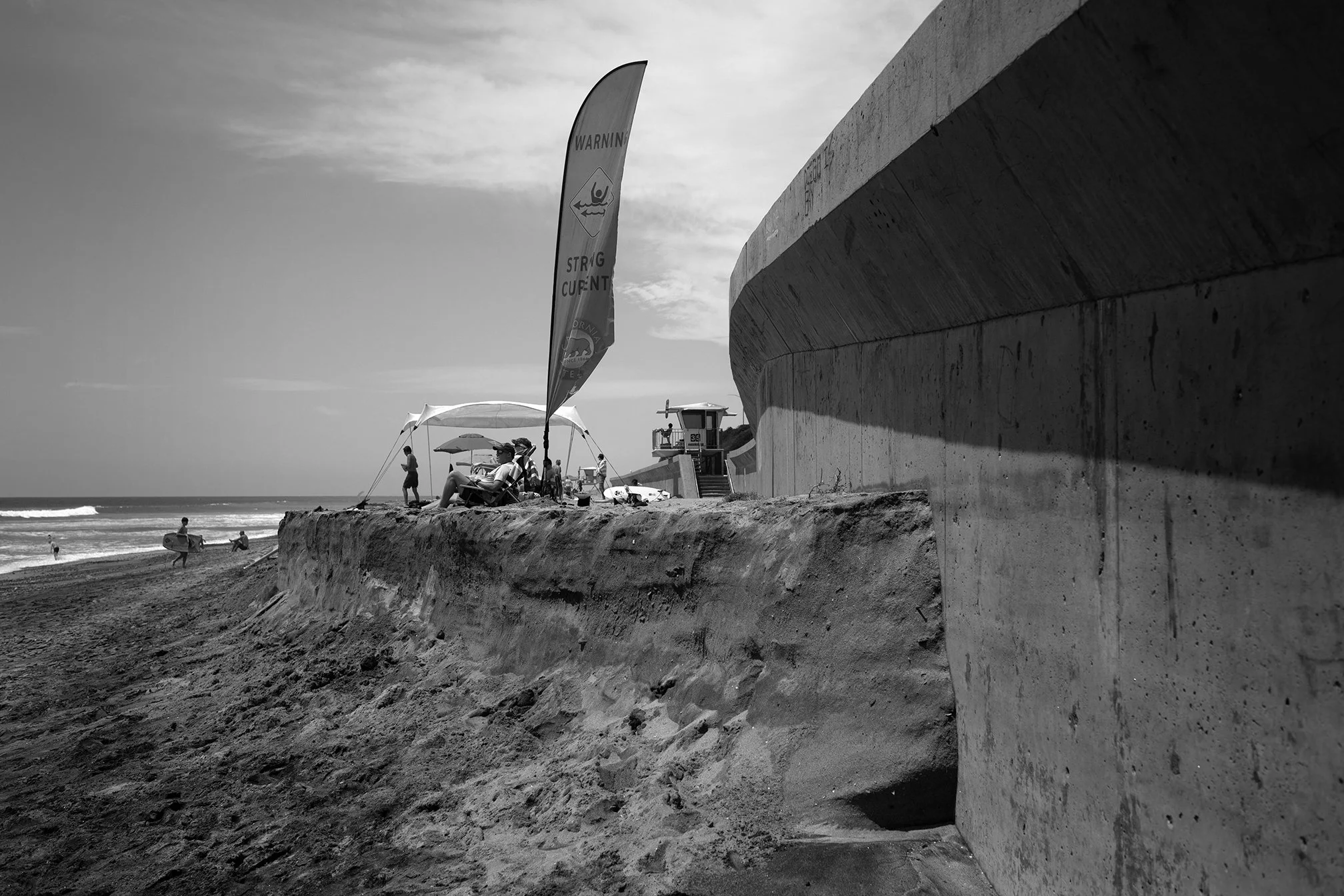
Eroded sand and seawall, Tamarack State Beach, August 2026. This was taken just after much of the replenished sand at Tamarack was washed away by high tides and large southern swells.
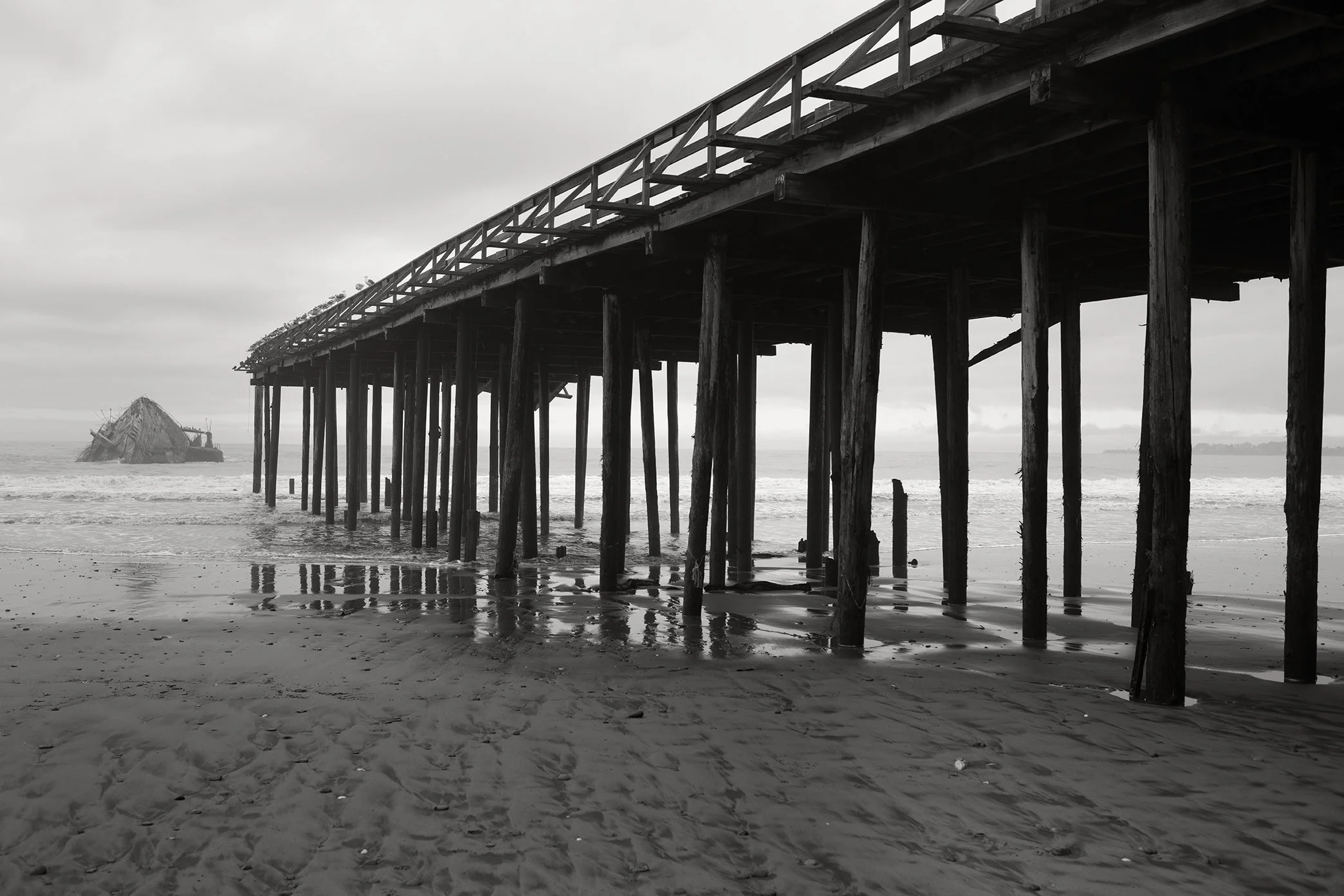
Storm damage, Aptos pier, 2023.
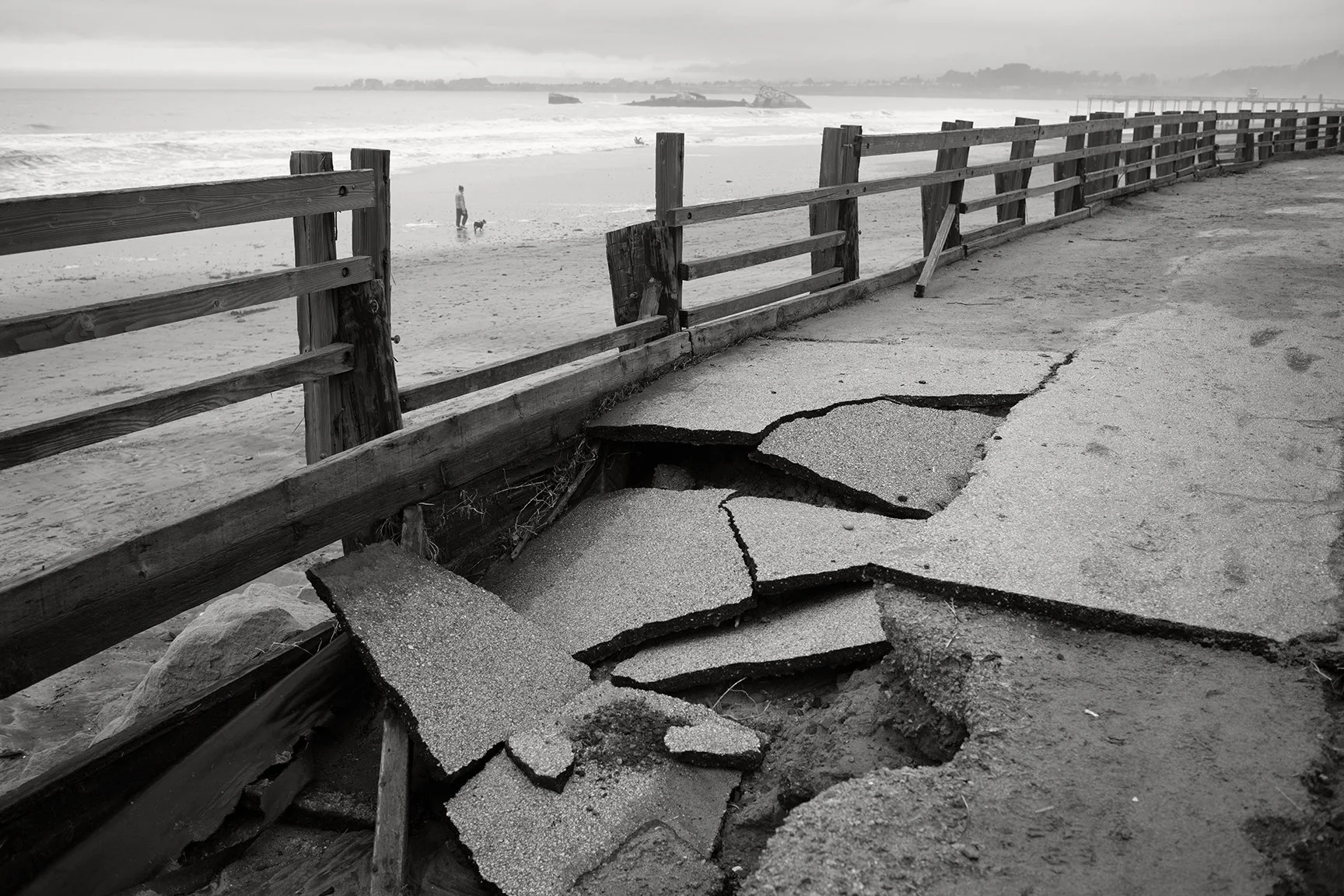
Storm damage at Seacliff State Beach, January 2023. This was taken during a quick walk along the shoreline after the storm system hit. Once the seawall and riprap were undermined by the waves, this section of the State Beach saw extensive damage.
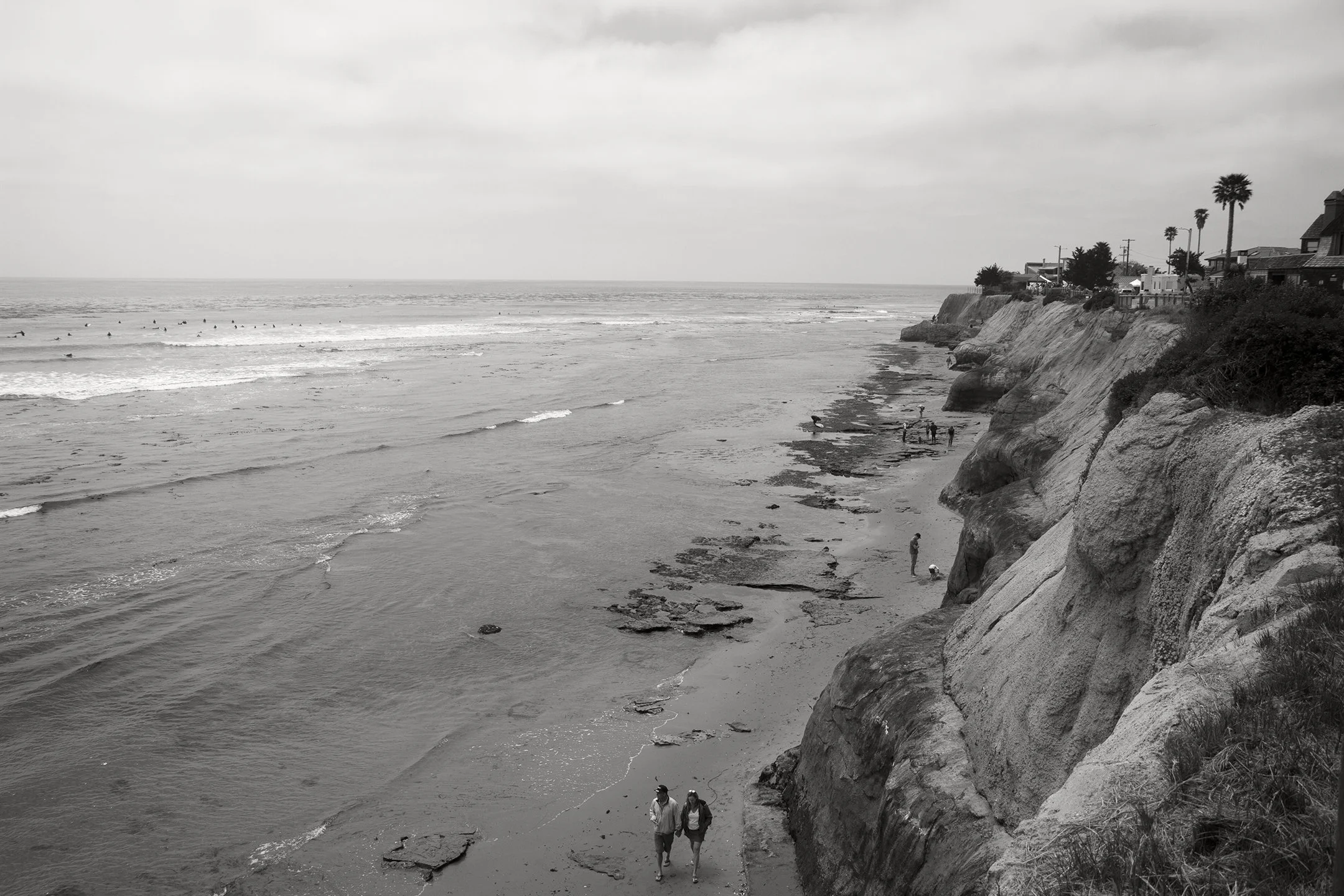
The Pleasure Point Seawall, 2021. One very interesting thing about this seawall is that many visitors do not actually know it’s an artificial wall. This seawall was completed in 2012.

South Jetty in Oceanside, CA, summer 2019. Technically, this is a “groin,” but most people refer to it as “South Jetty.” It is one of the better and more consistent surf spots in North County, and a good example of the effects that engineered structures can have not only on the coast, but also the people who use that coast.
As part of my current research on the human impacts of erosion and sea level rise, I have started documenting all of the armoring and engineering up and down the California coast. This includes rip-rap, sea walls, sand replenishment, and other coastal structures (such as piers). The California coast—like many developed coastlines around the world—is largely shaped by human engineering. Once you start paying attention, you’ll notice just how much of the coast is being upheld and modified by rock, concrete, and other structures. Here are a few images from this ongoing series…

This is a large rip-rap sea wall that protects the coast at a place called “Terramar” in Carlsbad, CA. Image from 2017.

There are a few different ways to try to stabilize or protect the coast. One is to install “hard” structures such as rip-rap and concrete sea walls. Another way is to create “soft” forms of protection, such as pumping new sand onto beaches that have eroded. Beach sand replenishment, also called “nourishment,” is common up and down the California coast. It is often one of the more popular approaches because the effects are immediate and it does not require the costly engineering and planning of hard armoring. But beach sand replenishment is still costly, and one of the main downsides is that all it takes is one winter storm and it can all be washed away. This image is from a sand replenishment project in Carlsbad, CA in March 2018.

As I mentioned in the image above, beach sand replenishment is popular, common, and problematic. All too quickly, the sand is washed away. This is an image taken from the Oceanside Pier in December 2018, showing how the ocean strips away newly replenished sand. In the long run, the ocean always wins.

This is a view of Wisconsin Avenue from summer 2018. This stretch of the coast has been armored with rip-rap for decades. One of the problems with this form of coastal armoring is that it protects the land or structures behind the wall, to the detriment of the beach in front of it. This image shows what you end up with over time: little to no beach at all. This is one of the key dilemmas of coastal planning. As Orrin Pilkey puts it, the issue often comes down to debates about protecting beaches or buildings.